An invitation lands in your inbox or on your doorstep, and the same question follows: what should I wear? For many women, the answer is a saree for wedding party. It flatters most body types and suits every season. It can be as quiet or as dramatic as you like, and it photographs beautifully.
Picking one is not always easy, though. There are dozens of fabrics, weaves, colours and drapes, and the right choice depends on the type of function, the time of day, the venue, the weather and your comfort. A saree that works at a daytime ceremony may feel wrong at an evening reception. A heavy silk that looks regal in a photograph may become exhausting after four hours.
This guide covers what you need to choose a wedding party saree with confidence. It explains fabrics and weaves, colours, blouse designs, draping, accessories, function-wise choices, budgeting, care and etiquette. It is written for guests, bridesmaids, relatives and anyone attending a wedding who wants to look polished without stress.
Why the Saree Is Still the First Choice for Wedding Parties
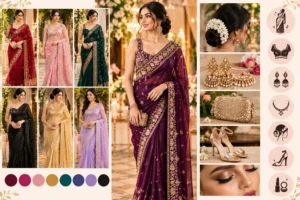
The saree has been worn in the Indian subcontinent for thousands of years. Its lasting popularity at weddings comes down to a few practical and cultural reasons.
- It carries cultural meaning: Many families associate particular weaves with auspicious occasions. Silk and zari are often linked with celebration, and red, maroon, gold and green have long been connected with festive events. Wearing a saree to a wedding signals respect for the occasion.
- It is one size, more or less: A saree is an unstitched length of fabric, so it adapts to changes in weight, height and body shape far better than a fitted outfit. That flexibility is why women often pass sarees down through generations.
- It offers huge variety: The same six yards can be a sturdy Kanjivaram, a floating chiffon, a sheeny satin or a sparkling net. You can drape it many ways, pair it with a traditional blouse or a modern corset top, and add a belt or a cape.
- It photographs well: Wedding photography is a big part of the modern celebration. A well-draped saree for wedding party creates clean vertical lines and rich texture, and it catches light in flattering ways.
- It is adaptable to modern taste: Designers now offer pre-stitched sarees, cape sarees, ruffle sarees and lightweight fabrics that suit younger guests who want tradition with ease. According to current fashion editorials, lighter fabrics, softer palettes and modern silhouettes such as cape and corset styles are prominent this year, while classic embroidered and printed sarees remain popular.
Understanding the Wedding Event Before You Choose
The single most useful step is to understand what you are dressing for. Ask yourself these questions before you shop:
- Which function is it? Haldi, mehendi, sangeet, wedding ceremony and reception each call for a different feel.
- What time is it? Daytime events suit lighter shades and airy fabrics. Evening events suit richer colours, shimmer and embellishment.
- Where is it? An outdoor lawn, a beach, a banquet hall and a temple all have different demands.
- What is the season? Summer weddings favour breathable fabrics, while winter weddings can carry velvet and heavier silk.
- What is your relationship to the couple? A sibling or close cousin can dress more boldly. A guest should avoid outshining the bride and groom.
- Is there a dress code or theme? Some families specify colours or ask guests to avoid certain shades. Follow these requests.
Answering these questions narrows the field quickly. Once you know the function, time and venue, choosing the fabric, colour and blouse becomes much easier.
Fabrics for a Wedding Party Saree
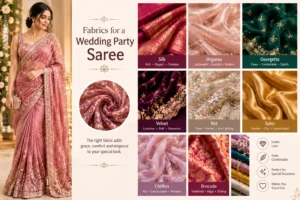
Fabric decides how a saree looks, drapes and feels across a long day. Here are the main options and where each shines.
Silk sarees
Silk is the traditional wedding choice, and there are many types.
Kanjivaram (Kanchipuram) silk comes from Tamil Nadu. It is known for heavy body, rich colours and zari borders. It suits ceremonies and formal daytime functions. Its weight gives structure to the pleats, but it can feel warm in summer.
Banarasi silk comes from Varanasi and is one of the most recognisable weaves for weddings. A Banarasi saree typically features intricate brocade, floral and vine motifs (jaal) and zari work. Traditionally heavy, Banarasi is now also woven in lighter forms. Recent trend coverage notes that these weaves are becoming lighter, softer and more versatile, which makes them easier to wear for a guest rather than only a bride.
Patola is an ikat weave with geometric patterns. It is prized for its craftsmanship and works well for guests who want something heritage-rich yet distinct from the usual brocade.
Tussar and raw silk have a natural, matte texture. They suit daytime weddings and pair beautifully with heavy jewellery or contemporary blouses.
Mysore silk is soft and comfortable with a subtle sheen. It is a good pick for warmer regions and long events.
Organza
Organza is crisp, sheer and lightweight. It holds volume, so the pleats look structured without adding weight. Organza sarees often come with floral prints or delicate thread embroidery on the border. They suit daytime weddings, receptions and summer events, and they are frequently cited among the most fashionable choices for guests this year.
Georgette and chiffon
Georgette and chiffon are soft and flowing. They are easy to drape and comfortable for dancing. A lightweight saree in georgette with sequin or embroidery work is a dependable choice for a sangeet or reception. The main caution is that they can slip during draping, so a well-fitted petticoat and a few extra pins help.
Satin
Satin has a glossy finish that looks luxurious in evening light. Satin sarees are sleek and modern, and they drape close to the body. They work well for cocktail-style receptions. Choose a good quality satin, because cheaper versions can cling or wrinkle.
Net and tulle
Net sarees are light and often heavily embellished with sequins, beads or thread embroidery. They photograph beautifully at evening events. Because the fabric is sheer, a coordinated underlay or petticoat makes a difference.
Crepe
Crepe has a smooth, slightly textured surface and falls neatly. It resists creasing better than many other fabrics, so it is practical for travel to destination weddings.
Velvet
Velvet is a winter favourite. It is plush and dramatic and pairs well with metallic or jewel tones. It is heavy, so it is best for cooler weather and indoor venues.
Cotton silk and handloom
Handloom weaves such as Chanderi, Maheshwari and cotton silk blends offer graceful elegance with comfort. They suit day functions and destination weddings in warm climates.
Quick comparison
| Fabric | Feel | Best for | Season |
|---|---|---|---|
| Kanjivaram silk | Heavy, structured | Main ceremony | Winter, mild weather |
| Banarasi silk | Rich, brocade | Ceremony, reception | All (lighter weaves for summer) |
| Organza | Light, crisp | Day events, receptions | Summer, spring |
| Georgette/chiffon | Soft, flowing | Sangeet, mehendi | All |
| Satin | Smooth, glossy | Evening receptions | All |
| Net | Airy, embellished | Evening parties | All |
| Velvet | Plush, heavy | Winter weddings | Winter |
| Chanderi/handloom | Light, textured | Day functions | Summer |
If you are unsure which is the best saree for a wedding you are attending, a mid-weight silk or a well-made organza with tasteful embroidery is a safe starting point for most functions.
Saree Colours for Wedding Functions
Colour sets the mood of your entire look. Choosing saree colours for a wedding involves personal taste, skin tone, the time of day and the etiquette around the couple’s chosen palette.
Traditional auspicious colours
Red, maroon, gold, orange, yellow and green have long festive associations. Red is often associated with the bride in many communities, so as a guest you may prefer to avoid a bridal red unless you know it is welcome. Deep maroon, wine or rust can offer a similar richness without competing.
Pastels
Soft shades such as mint, blush pink, lavender, powder blue and peach are consistently popular. They suit daytime weddings, outdoor venues and summer celebrations. Pastels look fresh, photograph softly and pair well with pearl or light gold jewellery.
Jewel tones
Emerald, sapphire, ruby, amethyst and teal are excellent for evening events. They look rich under artificial lighting and suit silk, satin and velvet.
Metallics
Gold, silver, bronze and rose gold add shimmer. A metallic tissue saree can be striking at a reception. Keep the rest of the look understated so the fabric can stand out.
Neutrals
Ivory, beige, champagne and soft grey look elegant, especially with coloured or embellished blouses. If the wedding is a traditional one, check the family’s customs first, since white and ivory carry different meanings in different communities.
Colours to think twice about
- White or all-white in communities where white is associated with mourning.
- Bridal red at the main ceremony, unless you are the bride.
- Black at some traditional functions, as it is considered inauspicious in some families. This is changing, but checking is polite.
Matching colour to skin tone
These are general guidelines, not rules:
- Fair skin: jewel tones, deep pinks, teal and pastels often look flattering.
- Medium or wheatish skin: mustard, coral, emerald, peach, rust and royal blue tend to work well.
- Deep skin: bright yellows, fuchsia, cobalt, gold and rich reds can look stunning.
Trust the way you feel in a colour. If you feel confident, it is the right shade.
Trends in Designer Sarees for Weddings
Fashion moves, but a few directions stand out in this year’s wedding coverage from retailers and fashion houses.
Comfort with elegance
Guest fashion is leaning toward outfits that look festive while allowing freedom to dance and mingle. That means airy fabrics and modern weaves that do not weigh you down.
Organza and sheer textures
Organza has become a wedding-season staple, often in watercolour-style florals or with delicate border embroidery.
Pastel palettes
Mint, blush, lavender and icy blue continue to attract wedding guests who prefer a gentle, understated look.
Reimagined Banarasi
A designer saree for a wedding in Banarasi often now uses lighter yarns, softer colours and less dense zari. The result keeps heritage appeal but is easier to carry through a long evening.
Modern silhouettes
Cape sarees, corset-style blouses, pre-draped sarees and belted sarees appeal to guests who want a contemporary twist. Draped sarees with sequinned blouses or ghungroo details are also popular for celebratory evenings.
Embellishment with restraint
Sequins, mirror work, stone work and thread embroidery are common. The current direction favours placing embellishment strategically, on the border or pallu, rather than covering the whole saree.
Traditional weaves remain strong
Even with new silhouettes, brides and guests continue to choose classic silk weaves. Their durability, richness and cultural weight keep them relevant.
Tip: Trends are useful inspiration, but a saree you love and can carry comfortably will always look better than one you chose only because it is fashionable.
Saree Blouse Designs for a Wedding Party
The blouse can transform a saree. The same six yards look completely different with a classic blouse versus a corset top. When choosing saree blouse designs, consider the saree’s weight, your comfort and the occasion.
Neckline options
- Boat neck: graceful and modest, suits most body types.
- Round neck: classic and comfortable.
- Sweetheart neck: romantic and flattering for many figures.
- V-neck: elongates the neck and suits heavier silk.
- High neck or collar: modern and elegant, especially for evening.
- Square neck: clean and structured, popular with silk.
- Halter neck: trendy and works with lightweight sarees.
- Off-shoulder: for contemporary, fashion-forward looks.
Sleeve options
- Sleeveless: cool and easy for summer.
- Cap sleeves: subtle coverage.
- Elbow-length: timeless and versatile.
- Three-quarter sleeves: elegant and covers the upper arms.
- Full sleeves: rich look for winter or traditional weddings.
- Puff or bell sleeves: playful and modern.
Back designs
Back designs are a chance for personality. Options include deep U or V backs, tie-up backs (dori), keyhole cut-outs, button backs and embellished backs with tassels. A back design can be a highlight even if the front is simple.
Blouse styles to consider
- Contrast blouses: a gold, black or jewel-tone blouse with a pastel saree creates a striking effect.
- Same-colour embroidered blouses: refined and cohesive.
- Corset blouses: structured and modern.
- Cape blouses or jackets: add drama and cover the shoulders.
- Peplum and jacket-style blouses: stylish for a fusion look.
- Velvet blouses: rich and popular with silk or net in winter.
Fit matters most
A well-fitted blouse supports the whole look. Ensure you can lift your arms, hug relatives and sit comfortably. Ask your tailor for proper lining, hooks that are secure and enough seam allowance for future alterations.
How to Drape a Saree for a Wedding
Knowing how to drape a saree properly is as important as choosing the right one. A well-draped saree looks polished and stays comfortable through the event.
What you need
- The saree
- A petticoat or underskirt that matches or complements the saree
- A fitted blouse
- Safety pins
- Heels or the footwear you will wear (drape with them on for the right length)
- A full-length mirror
Step-by-step: the classic Nivi drape
- Wear the petticoat: with the drawstring tied firmly at the waist. It should sit at the top of your footwear so the saree hem grazes the floor.
- Start at the plain end: Tuck the plain end of the saree into the petticoat at the right hip, near the navel, and wrap it once around the waist ending back at the front.
- Create the pleats: Gather roughly five to seven pleats of about four to five inches each. Keep them even and aligned.
- Tuck the pleats: Tuck the pleats into the petticoat, just left of the navel, with the pleats opening to the left.
- Wrap around again: Bring the remaining fabric around your back and over the left shoulder.
- Arrange the pallu: The pallu is the decorative end. Pleat it neatly and pin it to the blouse at the shoulder so it stays in place.
- Adjust and pin: Check that the hem is even and the pleats hang straight. Add pins at strategic points, such as under the pleats and at the waist.
Draping styles beyond Nivi
- Bengali or Bengali-style drape: an elegant option with a wide pallu draped across the front.
- Gujarati (seedha pallu): the pallu goes over the right shoulder to the front, showcasing the design.
- Maharashtrian (nauvari): a nine-yard drape that resembles a dhoti-style wrap.
- Butterfly drape: pleats fan out for a dramatic look, suitable for lightweight fabrics.
- Belted drape: a belt over the waist adds definition and holds the pleats.
- Pre-draped saree: stitched pleats save time and ensure consistency, ideal for dancing or first-time wearers.
Draping tips for wedding parties
- Practise before the day: Drape the saree at least once, wearing the same blouse and footwear.
- Use enough pins: Pins at the shoulder, pleats and waist keep everything secure.
- Keep the pleats even: Iron them beforehand for a cleaner finish.
- Match the drape to the fabric: Stiff silk suits sharp pleats, while chiffon suits softer folds.
- Consider a professional drape: If you are unsure, a saree draper can complete it in about 10 to 15 minutes.
Function-Wise Saree Ideas
Weddings today often span several days. Here is how to adjust your saree for wedding party according to the function.
Haldi
Haldi is a daytime, playful ceremony where turmeric paste is applied. Choose yellow, mustard, white with floral prints or pastel cotton. Avoid silk you would hate to stain. A simple, lightweight saree in cotton or georgette works well.
Mehendi
Mehendi is colourful and relaxed. Greens, oranges, pinks and floral prints are popular. Light fabrics such as georgette, chiffon or cotton silk make it easier to sit for long periods. Choose a blouse with sleeves that allow you to hold your hands up comfortably if you are getting henna.
Sangeet
Sangeet is an evening of music and dancing. Go for something you can move in: a georgette, chiffon or net saree with sequins, a belted or pre-draped saree, or a cape saree. Sparkle works well, and comfort is essential.
Wedding ceremony
The main ceremony is often traditional. Silk sarees in rich colours are appropriate. A Kanjivaram, Banarasi or Patola saree in jewel tones or a muted gold works well. Cover shoulders modestly if the ceremony takes place at a temple or religious venue.
Reception
A saree for a reception can be more glamorous. Satin, net, organza, tissue or sequinned sarees look excellent under evening lighting. Sleek drapes, metallic shades and statement blouses are appropriate. A lightweight saree helps because receptions involve long hours of standing and socialising.
Cocktail party
Modern satin, sequinned or ruffle sarees, paired with a corset blouse or bralette-style top, suit a cocktail setting. Keep the styling clean and confident.
Engagement
Engagements often blend traditional and modern. A pastel or soft-metallic saree with elegant embroidery is a graceful choice.
Destination or beach wedding
Choose breathable fabrics such as chiffon, georgette or organza in light shades. Avoid heavy silk and long trailing pallus that may catch the wind. Practical footwear like block heels or wedges helps on sand or grass.
Choosing a Saree by Body Type
These are suggestions, not restrictions. Wear what makes you comfortable.
Petite frame
- Choose lightweight fabrics such as chiffon, georgette and crepe.
- Small to medium prints and borders keep proportions balanced.
- A monochrome look can appear elongating.
- Wear heels or wedges to help the drape fall smoothly.
Tall frame
- Heavier fabrics such as silk and brocade sit well.
- Wide borders and bold prints work nicely.
- Contrast blouses can add interest.
Curvy or plus-size
- Choose fabrics with fluid drape such as georgette, chiffon and crepe.
- Fewer, neat pleats reduce bulk at the waist.
- A well-fitted blouse offers structure.
- Vertical patterns and monochrome tones can look streamlined.
- Avoid overly stiff fabrics if you dislike volume.
Slim frame
- Structured fabrics such as organza, Banarasi and raw silk add dimension.
- Layered pleats and embellished borders add fullness.
- Ruffled or tiered sarees work well.
Apple or pear shapes
- For a fuller midsection, a lower waist drape and a soft fabric can help.
- For a fuller lower half, choose lighter fabric at the hips and keep embellishment near the pallu and blouse.
The most reliable approach is to try the saree on with the blouse and footwear before deciding.
Jewellery, Footwear and Accessories
Accessories complete a wedding party saree look. The general rule is to let one element lead.
Jewellery
- Heavy silk saree: choose simpler jewellery, such as a necklace and earrings, or a statement necklace with plain earrings.
- Plain or pastel saree: you can wear bolder pieces like a choker or layered necklaces.
- Heavily embellished saree: keep jewellery minimal.
- Metal tones: gold suits warm colours and silk, while silver or oxidised pieces suit pastels and cool tones. Kundan, polki, pearls and temple jewellery are all popular.
- Details: a maang tikka, bangles, rings and a waist chain (kamarbandh) can add polish.
Footwear
Comfort is the priority. Options include block heels, wedges, embellished flats, kolhapuris or sandals that match the saree. Because you will drape the saree to the shoe height, decide on your footwear before you drape.
Bags and clutches
A small clutch, potli bag or embellished sling holds essentials. Match the metal tone to your jewellery.
Hair and makeup
- Buns, braids, side-swept curls and loose waves all work.
- Add flowers, pins or a hair accessory that complements the saree.
- Choose makeup suited to the time of day. Daytime looks can be dewy and light, while evening allows bolder eyes or lips.
Other extras
- Shawls or stoles for winter weddings.
- A saree belt to define the waist.
- A dupatta-style stole with lightweight sarees for extra coverage.
Budget Planning for a Wedding Party Saree
You do not need to spend heavily to look elegant. Decide your budget first, then choose within it.
Typical price ranges (general guidance)
Prices vary by brand, region and weave, so treat these as rough categories:
- Budget-friendly: printed georgette, chiffon, crepe and simple embroidered sarees. Good for mehendi, haldi and casual functions.
- Mid-range: organza, satin, Chanderi, semi-silk, Mysore silk and embroidered net sarees.
- Premium: pure silk such as Banarasi, Kanjivaram and Patola, and designer sarees with hand embroidery.
- Luxury: handwoven heirloom pieces and couture designer sarees.
Smart ways to save
- Rent a designer saree for a single event.
- Reuse and restyle: Pair a saree you own with a new blouse.
- Buy versatile pieces: A pastel organza saree can be worn again in different styles.
- Shop off-season or during sales.
- Invest in the blouse: A well-designed blouse can refresh an older saree.
- Borrow family sarees, which often carry sentimental value too.
Where to spend more
Spend on fit (blouse stitching), quality of fabric and the elements you will notice most, like the border and pallu. Trendy embellishments that fade quickly are less valuable than well-made basics.
Buying Tips: How to Choose the Right Saree
Check the fabric quality
- Feel the fabric and check it is not stiff or scratchy against the skin.
- Inspect weave consistency, especially the border.
- For silk, ask about authenticity. Look for recognised marks such as the Silk Mark or handloom mark when relevant.
- For zari, ask whether it is pure zari or imitation, since this affects price and durability.
Examine the finishing
- Check that the border is even and stitched properly.
- Inspect the fall (the hem at the bottom), the pallu attachment and any embroidery for loose threads.
Think about weight
Lift the saree and imagine wearing it for several hours. If it feels heavy in the shop, it will feel heavier at the event.
Ask about the blouse piece
Many sarees come with an unstitched blouse piece. Confirm its size and whether it matches the design so your tailor can plan properly.
Consider colour in different lights
Colours can look different in a shop, under daylight and under evening lights. Step near a window when possible.
Buying online
- Read product descriptions and check the fabric, dimensions and care instructions.
- Look at real customer photos where available.
- Check the return and exchange policy.
- Buy early, so you have time for blouse stitching and alterations.
- Compare more than one retailer.
Timeline
- 4 to 6 weeks before: choose the saree and colour palette.
- 3 to 4 weeks before: finalise the blouse design and give it to the tailor.
- 2 weeks before: first fitting.
- 1 week before: final adjustments, petticoat, falls and pico done. Buy accessories.
- 2 to 3 days before: trial drape, iron, and prepare pins.
Saree Care and Storage
A good saree can last decades with proper care.
Before you wear it
- Get the fall and pico (edge finishing) done in advance.
- Use a petticoat that matches the saree’s tone.
- Test any perfume away from the fabric, since sprays can stain silk.
After wearing
- Air the saree in a shaded, ventilated spot before folding it away.
- Check for stains or perspiration marks and treat them promptly.
- Avoid direct sunlight, which can fade colours.
Cleaning
- Silk, zari and heavily embellished sarees: dry clean only.
- Cotton and simple synthetic sarees: gentle hand wash in cold water with mild detergent if the label allows.
- Never wring delicate fabrics.
- Follow the care label where available.
Ironing
- Use a low to medium setting, depending on fabric.
- Iron on the reverse side.
- Place a thin cloth over zari to avoid damaging metallic threads.
Storage
- Wrap silk sarees in soft muslin or cotton cloth. Avoid plastic covers for long-term storage since they trap moisture.
- Fold along different lines every few months to prevent permanent creases and tears along fold lines.
- Store in a cool, dry place with neem leaves, lavender sachets or other natural repellents to deter insects.
- Keep zari sarees separate from delicate fabrics so metal threads do not snag other sarees.
Wedding Guest Etiquette for Saree Wearers
Being a thoughtful saree for wedding guest wearer is about respect for the couple and the occasion.
- Avoid competing with the bride: Skip bridal red and very heavy bridal-style embellishment.
- Follow requested colours and themes: If the family has asked for a colour palette, stick to it.
- Respect the venue: Cover shoulders and dress conservatively for religious ceremonies.
- Consider mobility: You may need to sit on the floor, walk on grass or climb stairs, so pick a drape and footwear you can manage.
- Be punctual: Draping takes time, so plan for it.
- Carry essentials: Pack safety pins, a small sewing kit, tissue, a compact mirror and a light shawl.
- Do not upstage the couple in photos: Simple elegance is more graceful than excessive glitter.
- Be mindful of the season and time: A heavy silk saree at a beach afternoon wedding may not be practical.
Common Mistakes to Avoid
- Choosing only by trend: Pick what suits you, not only what is popular.
- Ignoring comfort: A gorgeous saree that makes you uncomfortable will show in your posture and mood.
- Poor blouse fit: A tight or loose blouse spoils even an expensive saree.
- Skipping a trial drape: Practise before the day.
- Wrong petticoat: Colour mismatch can show through lighter fabrics, and a loose petticoat can slip.
- Too many statement elements: A heavy saree, heavy jewellery and a heavy blouse all at once can overwhelm.
- Forgetting footwear height: Drape length changes with heels.
- Last-minute shopping: Rushing leads to compromises.
- Ignoring weather: Heavy fabric in heat or thin fabric in cold can ruin the day.
- Not checking with the family: A quick question about colours or dress code can avoid awkwardness.
Sample Outfit Combinations
Here are combinations you can adapt.
1. Daytime garden wedding
Pastel mint organza saree with a subtle floral border, a blush boat-neck blouse, pearl jewellery, low block heels and loose curls with fresh flowers.
2. Traditional ceremony
A deep green Banarasi saree with gold zari, a matching elbow-sleeve blouse, kundan necklace, bangles, a sleek bun and a small bindi.
3. Evening reception
A champagne or wine satin saree with a corset-style blouse, statement earrings, a slim clutch and a sleek ponytail.
4. Sangeet
A sequinned georgette or net saree, a belted drape, a comfortable blouse and flat embellished footwear for dancing.
5. Mehendi
A mustard or coral chiffon saree with a printed border, a contrast blouse, oxidised jewellery and a braid with flowers.
6. Destination beach wedding
A light georgette or chiffon saree in aqua or peach, a halter blouse, minimal jewellery and comfortable wedges.
7. Winter wedding
A velvet blouse with a silk saree in jewel tones, a matching shawl and layered gold jewellery.
Frequently Asked Questions
What is the best saree for a wedding party?
The best option depends on the function, time and weather. For most guests, a mid-weight silk such as Banarasi or Mysore silk suits ceremonies, while organza, satin or georgette works better for receptions and sangeets. Choose comfort, a flattering colour and a good blouse fit.
Which colour saree should I wear to a wedding as a guest?
Pastels, jewel tones, gold and rich neutrals are safe choices. Avoid bridal red, and check for community customs around white and black. If the family has given a colour theme, follow it.
Can I wear a lightweight saree to a wedding?
Yes. A lightweight saree in organza, georgette or chiffon is an excellent choice for daytime weddings, receptions and summer events. Choose good embellishment or a rich blouse to keep it festive.
Is a Banarasi saree suitable for a wedding guest?
Yes. A Banarasi saree is a classic wedding choice. Lighter, softer Banarasi weaves are increasingly popular and easier to wear through long celebrations.
How do I pick a saree for a reception?
Look for fabrics that catch light and move well, such as satin, net, organza or tissue, in colours like wine, emerald, gold or navy. Add a statement blouse and keep accessories balanced.
What should I wear with a saree if I cannot wear a traditional blouse?
You can use a corset top, bralette-style blouse, cape, jacket or a fitted crop top. Make sure the neckline and coverage suit the venue and your comfort.
How long does it take to drape a saree?
A practised person can drape a saree in about 10 to 15 minutes. If you are new, allow 30 minutes or more, or consider a pre-draped saree or a professional.
How do I stop my saree from slipping?
Use a well-fitted petticoat tied firmly, secure pleats with safety pins, and pin the pallu to the shoulder. Lightweight fabrics benefit from extra pins, and a saree belt can help.
Can I rent a saree for a wedding?
Yes. Renting is a practical way to wear a designer saree for one event. Check the rental period, cleaning policy, deposit and blouse alteration options in advance.
How do I choose a saree for my body type?
Focus on fabric fall, colour and prints. Lightweight, fluid fabrics generally suit most shapes, while a good blouse fit creates structure. Try the saree on with the blouse before deciding.
What is the difference between a saree for a wedding guest and a bridal saree?
Bridal sarees are typically heavier and more heavily embellished, and often in traditional bridal colours. A guest saree is usually lighter, more comfortable and toned down so the bride remains the focus.
How should I store a silk saree?
Wrap it in muslin or soft cotton, keep it in a cool dry place, refold it along different lines periodically and use natural insect repellents. Avoid long-term plastic storage.
Final Thoughts
Choosing a saree for wedding party is less about following rules and more about understanding the occasion, your comfort and your own style. Start with the function, time and weather. Then choose a fabric that feels right, a colour that flatters you, and a blouse and accessories that complete the look. Practise your drape, plan your timeline, and keep the etiquette of the occasion in mind.
Whether you choose a rich Banarasi for a traditional ceremony, a floating organza for a garden wedding or a sparkling satin for the reception, the best saree is the one that lets you enjoy the celebration. When you feel comfortable and confident, you will look your best.
Have you worn a memorable saree to a wedding? Share your favourite tips or questions in the comments.