
Indian weddings are a whirlwind of colour, music, and multiple back-to-back functions — and every single one of them calls for a different kind of outfit. Somewhere between the haldi ceremony and the sangeet night, the reception and the final vidaai, one garment manages to show up everywhere and never look out of place: the saree. If you have been searching for the perfect wedding party wear saree, you already know how overwhelming the choices can feel. Silk or organza? Traditional zari or modern sequins? Pastel or jewel tone? This guide breaks all of it down so you can walk into every function looking effortlessly elegant.
Whether you are the bride hunting for a reception look, a close relative planning her sangeet outfit, or a guest simply looking for the right party wear saree for wedding season, this 2026 style guide covers fabrics, colours, blouse trends, draping styles, occasion-wise recommendations, and practical shopping and care tips — everything you need in one place.
1. Why the Saree Remains the Ultimate Wedding Party Wear
Lehengas, gowns, and Indo-western sets have all had their moment on the wedding circuit, but the saree continues to hold its own as the most versatile piece of wedding party wear. There are a few reasons this six-yard wonder never goes out of style.
First, it is universally flattering. Unlike fitted silhouettes that need to be tailored precisely to a body type, a well-draped saree skims and enhances almost every figure. Second, it is endlessly customisable — the same saree can look completely different depending on how it is draped, which blouse it is paired with, and what jewellery accompanies it. Third, sarees photograph beautifully. The way the pallu falls, the movement of the pleats while walking or dancing, and the play of embroidery under wedding lighting make sarees a favourite for both candid and posed wedding photography.
Finally, sarees carry cultural weight. Whether it is a Banarasi passed down through generations or a brand-new designer piece bought specifically for the wedding, a saree often becomes part of a family’s story — worn once at a cousin’s wedding and again years later at another celebration. For anyone deciding between outfit options, a wedding party wear saree offers a rare mix of tradition, comfort, and show-stopping glamour that few other garments can match.
2. Types of Fabrics for Wedding Party Wear Sarees
The fabric of a saree determines everything from how it drapes to how comfortable it is through a six-hour wedding function. Here is a breakdown of the most popular fabrics for party wear sarees for wedding season in 2026.
Silk Sarees
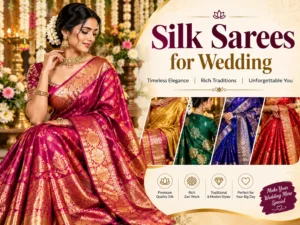
Silk remains the gold standard for wedding occasions. Banarasi, Kanjivaram, and Mysore silk sarees are prized for their rich texture, natural sheen, and the way they hold intricate zari and thread work. Silk sarees for wedding ceremonies are ideal for the main event — the wedding day itself, or a traditional reception where you want maximum grandeur.
Organza Sarees
If silk is about heritage, organza is about the modern wedding aesthetic. Lightweight, sheer, and photograph-friendly, organza sarees for wedding functions have become hugely popular for daytime events and receptions alike. They drape beautifully, don’t weigh the wearer down, and pair well with both subtle embroidery and bold foil prints.
Georgette and Chiffon Sarees
Known for their fluidity, georgette and chiffon sarees create a soft, flowing silhouette that moves elegantly on the dance floor. These are excellent choices for sangeet nights and cocktail parties where mobility matters as much as style.
Net and Sequinned Sarees
For evening receptions and cocktail functions, net sarees embellished with sequins, stone work, or delicate embroidery bring a glamorous, red-carpet feel. They catch the light beautifully under indoor and evening lighting.
Handloom and Sustainable Fabrics
A growing number of brides and guests are gravitating toward handloom sarees made with organic silk and natural dyes. This shift toward sustainable, eco-conscious fashion is one of the defining saree trends 2026 has brought to wedding wardrobes, blending environmental consciousness with timeless craftsmanship.
Crepe and Satin Sarees
Crepe silk and satin sarees have carved out a niche of their own for daytime wedding functions. Their fall is smooth and body-hugging without being heavy, making them a comfortable option for guests who want understated elegance rather than heavy embellishment. A soft blush crepe saree, for instance, works beautifully for a daytime reception or a brunch-style wedding function, especially when paired with rose-gold jewellery for a contemporary, feminine finish.
Tissue and Metallic Sarees
For those who want maximum shimmer without heavy embroidery, tissue sarees woven with fine metallic threads offer a naturally luminous finish. These sarees catch the light beautifully on their own, which means they can be styled with relatively simple jewellery and still make a strong visual impact — a useful option for guests who want glamour without the cost of heavy zari work.
3. Top Wedding Saree Trends for 2026
Every wedding season brings its own set of style shifts, and 2026 is no exception. Here are the standout trends shaping designer wedding sarees this year.
Pre-Draped Sarees
One of the biggest shifts this year is the rise of the pre-draped, ready-to-wear saree. Designed with engineered pleats and pre-set pallus, these sarees eliminate the stress of traditional draping — especially useful for early morning ceremonies or destination weddings where time and convenience matter. Pre-stitched sarees in lightweight chiffon and georgette have become everyday staples for both weddings and cocktail parties.
Statement Blouses
The blouse has firmly moved from supporting act to centrepiece. Deep-back cuts, structured corset silhouettes, off-shoulder necklines, and heavily hand-embroidered blouses are being paired with relatively simple sarees, letting the blouse carry the drama. If you are choosing a wedding party wear saree this year, consider investing more attention in the blouse design than you might have in previous seasons.
Sheer Fabrics and Bold Prints
Organza continues to dominate, but 2026 pushes it further with sheer layering, abstract prints, and foil detailing. This trend is especially popular for house parties, cocktail evenings, and less formal wedding functions where a saree can feel more like a fashion statement than a traditional garment.
Borderless and Minimalist Weaves
On the traditional end of the spectrum, borderless silk sarees are trending for brides and guests who want intricate body motifs to take centre stage without a heavy border breaking up the drape. Paired with fine gold pinstripe weaving, these sarees offer glitter and richness without excessive embroidery.
Mixed Metal Jewellery Pairings
Gone are the days of matching gold jewellery to gold zari by default. This year’s trend embraces mixing metals — a silver zari saree paired with diamond or emerald jewellery, for instance — for a cooler, more contemporary finish.
Cape and Layered Draping
Cape-style dupattas and layered draping techniques are being used to add drama to receptions, offering brides and guests a way to elevate a simple saree into a showstopping entrance look.
4. Best Colour Palettes for Wedding Party Wear Sarees
Colour choice can make or break a wedding look, and 2026’s palette leans into a thoughtful mix of bold traditional shades and soft contemporary tones.
- Maroon and gold remains a forever-favourite for main wedding ceremonies, symbolising tradition and prosperity, especially when paired with rich zari work and silk fabric.
- Lavender and silver offers a cooler, more modern alternative that photographs beautifully under both daylight and evening lighting.
- Blush pink and powder blue have become go-to choices for daytime functions like mehendi and haldi, where a softer palette suits the mood.
- Mustard yellow and emerald green bring festive energy, particularly for the haldi ceremony, where yellow has both symbolic and visual significance.
- Off-white and peach tones are perfect for brunch functions or daytime receptions that call for understated elegance.
For guests wondering what colour of wedding guest saree to choose, a good rule of thumb is to lean toward deeper jewel tones for evening functions and pastels for daytime events — while always avoiding pure white or red, which are traditionally reserved for the bride in most Indian wedding customs.
5. Occasion-Wise Saree Guide (Haldi to Reception)
Every wedding has multiple functions, and each one calls for a slightly different saree. Here is how to think about your wedding party wear saree choices function by function.
Haldi Ceremony
Light, breathable fabrics in yellow, mustard, or floral prints work best here, since the ceremony involves turmeric paste and can get messy. Cotton or light georgette sarees with minimal embroidery are practical and still festive. Avoid delicate silks or heavily embellished pieces you would be upset to stain, and choose a blouse you don’t mind washing separately afterward. Many guests now opt for pre-loved or budget cotton sarees specifically for haldi, saving their more expensive pieces for later functions.
Mehendi Function
Mehendi calls for vibrant colours and comfortable fabrics that allow you to sit for long stretches while getting henna applied. Georgette or chiffon sarees in bright pinks, oranges, or greens, paired with statement earrings, work beautifully. Since hands are often occupied with fresh henna for hours, it helps to choose a saree that doesn’t require constant readjustment — a well-pinned pallu and a comfortable blouse fit go a long way toward making the function enjoyable rather than fussy.
Sangeet Night
Since sangeet usually involves dancing, fabric choice matters. Lightweight net, georgette, or sequinned sarees that move well are ideal. Pair with a well-fitted, embellished blouse and comfortable footwear for an evening of music and dance. Pre-draped sarees are particularly popular for sangeet nights, since the secured pleats stay in place through hours of movement without the pallu slipping or pleats coming undone mid-performance.
Wedding Ceremony
This is where richer fabrics take over. Silk sarees — Banarasi, Kanjivaram, or Mysore silk — in deep, traditional colours like maroon, deep red, or royal blue suit the gravity of the main ceremony. Heavier zari work and traditional jewellery complete the look. If the ceremony is long and involves multiple rituals, consider a saree with a fitted underskirt or petticoat that keeps the drape secure through hours of sitting and standing, and choose a blouse with sleeves if the venue is air-conditioned, since ceremonies can run late into cooler evenings.
Reception
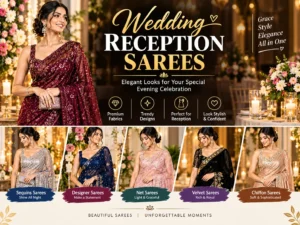
The reception is where glamour peaks. Sequinned net sarees, organza sarees with metallic embroidery, or contemporary designer pieces with statement blouses are popular choices. This is also where wedding reception sarees with corset blouses, off-shoulder cuts, or cape draping tend to make the biggest impression. Since receptions are typically evening events held indoors, fabrics that catch artificial light — like tissue, net, or sequinned georgette — tend to photograph better than matte fabrics.
Cocktail Party or House Party
For more relaxed, evening-only events, sheer fabrics, bold prints, and experimental draping styles are trending. Think of it as your going-out outfit, reimagined as a saree. Belted sarees, pantsuit-style pre-draped sets, and sarees worn with crop-top blouses are increasingly common at these more informal, fusion-friendly functions.
6. Blouse Designs That Are Trending This Wedding Season
As mentioned earlier, the blouse has become just as important as the saree itself. Popular blouse trends for designer wedding sarees this season include:
- Corset-style blouses with structured boning for a fitted, sculpted silhouette
- Deep-back or backless blouses, ideal for reception and sangeet looks
- Off-shoulder blouses, offering a modern, fusion-inspired silhouette
- High-neck, long-sleeved “second skin” blouses in the same shade as the saree, for a sleek, monochrome finish
- Heavily embroidered statement blouses paired with a comparatively simple saree, letting the blousework do the talking
- Cape-sleeve and ruffled-sleeve blouses, adding drama and movement for evening functions
When shopping for your wedding party wear saree, it is worth trying on a few blouse styles before finalising, since the right blouse can completely transform how a saree looks and feels.
7. Regional Saree Styles Worth Considering
India’s saree traditions vary dramatically by region, and many brides and guests are now deliberately seeking out regional weaves for their wedding party wear saree rather than sticking to generic designer options.
- Banarasi sarees from Uttar Pradesh are known for their rich gold and silver zari brocade work and are a perennial favourite for the main wedding ceremony.
- Kanjivaram sarees from Tamil Nadu are prized for their thick silk texture, contrasting borders, and temple-inspired motifs, making them a popular choice among South Indian brides and wedding guests alike.
- Bandhani sarees from Gujarat and Rajasthan bring a festive, tie-dye pattern that works wonderfully for mehendi and sangeet functions.
- Paithani sarees from Maharashtra, recognisable by their peacock and floral motifs woven into the pallu, offer a regal alternative for those wanting something distinct from the more commonly seen Banarasi or Kanjivaram styles.
- Chanderi and Maheshwari sarees from Madhya Pradesh are lighter, cotton-silk blends that suit daytime functions and puja ceremonies particularly well.
Choosing a regional weave not only adds a distinctive touch to your wedding wardrobe but also supports traditional weaving communities — an increasingly important consideration for shoppers who care about where their clothing comes from.
8. Draping Styles to Try in 2026
Draping style is often the most overlooked element of saree styling, yet it can dramatically change the overall silhouette.
- The classic Nivi drape remains the most popular and versatile option, suitable for nearly every occasion.
- The Bengali drape, with its wide pleats and distinctive pallu style, offers a regal, old-world charm perfect for the main wedding ceremony.
- The Gujarati (seedha pallu) drape, where the pallu is brought to the front, is a striking choice for showcasing heavily embroidered pallus.
- For those who love convenience, the pre-draped or ready-to-wear saree trend mentioned earlier allows for a perfectly pleated look without the time investment of traditional draping — ideal for early ceremonies or destination weddings.
Finally, belted and cape drapes are gaining popularity for cocktail parties and receptions, offering a structured, fashion-forward silhouette that still retains the saree’s traditional charm.
9. How to Choose the Right Saree for Your Body Type
While sarees are flattering on nearly every body type, a few styling adjustments can enhance your silhouette further.
- If you have a petite frame, opt for sarees with smaller prints and lighter borders, and avoid overly heavy pleats that can overwhelm your frame. A well-fitted blouse and a saree draped slightly higher at the waist can also create the illusion of added height.
- If you are tall, you can experiment with bold borders, heavy embroidery, and dramatic pallu styles, since you have the frame to carry more visual weight without looking overwhelmed.
- For those with a fuller figure, fabrics with natural flow like georgette or chiffon tend to drape more comfortably than stiff silks, and vertical motifs or borders can help elongate the silhouette.
- If you are broad-shouldered, consider blouse necklines like sweetheart or V-necks that soften the shoulder line, and avoid excessive puff sleeves that add bulk.
Ultimately, personal comfort and confidence matter more than any rigid rule — the best wedding party wear saree is one that makes you feel like the best version of yourself.
10. Accessorising Your Wedding Party Wear Saree
The right accessories can elevate even a simple saree into a showstopping wedding look.
- Jewellery should be chosen based on the neckline of your blouse — a statement necklace suits a simple round neck, while a high-neck blouse pairs better with striking earrings and minimal neckwear. As noted earlier, mixing metals — silver zari with diamond jewellery, or gold zari with emerald pieces — is a defining trend for 2026.
- Footwear matters more than people realise, especially for functions involving dancing. Comfortable block heels or embellished juttis are practical choices for sangeet and mehendi, while statement heels work well for more formal ceremonies and receptions.
- Hairstyles should complement your saree drape and neckline. Sleek buns and braids work beautifully with deep-back blouses, while soft waves suit high-neck or heavily embellished blouses.
Potli bags or clutches in coordinating or contrasting metallic tones complete the look without overwhelming the overall outfit.
11. Budget Guide: Shopping Smart for Wedding Sarees
- Wedding season can get expensive quickly, especially if you are attending multiple functions and need a different wedding party wear saree for each. Here is how to plan smartly.
- For a budget-friendly approach, invest in one or two versatile silk or organza sarees in neutral or jewel tones that can be re-styled with different blouses and jewellery across multiple functions. Renting designer sarees for the reception or sangeet is also increasingly popular and can significantly cut costs without compromising on the “wow” factor.
- For a mid-range budget, consider a mix of one heirloom-style silk saree for the main ceremony and a couple of lighter organza or georgette pieces for the pre-wedding functions.
- For those with a higher budget, designer collaborations, hand-embroidered pieces, and fully customised blouse-saree sets offer the most personalised and photograph-ready looks, particularly for reception functions where guests and photographers alike will be paying close attention.
12. Where and How to Buy Designer Wedding Sarees
When shopping for designer wedding sarees, a few practical tips can help you avoid common pitfalls.
Always check the fabric composition before purchasing, especially for silk sarees, since blended fabrics are often sold at pure-silk prices. If shopping online, look for detailed close-up photos of the embroidery, border, and blouse piece, and check return policies carefully since colours can sometimes appear different on screen than in person.
If possible, try to see the saree draped — either on a mannequin, in a video, or in person — rather than judging solely from a flat-lay photo, since draping can dramatically change how a print or embellishment looks.
For heirloom pieces like Kanjivaram or Banarasi silk, buying from established weaving clusters or certified handloom retailers ensures authenticity and often comes with a certificate of provenance, which can matter both for quality assurance and resale value down the line.
13. Saree Care Tips to Keep It Wedding-Ready
A wedding party wear saree is often an investment piece, and proper care ensures it lasts for years and multiple future occasions.
Always dry-clean silk and heavily embroidered sarees rather than washing them at home, since embellishments like zari, sequins, and stones can be damaged by water and detergent. Store sarees wrapped in muslin cloth rather than plastic, which can trap moisture and cause discolouration over time. Refold silk sarees every few months along different creases to prevent permanent fold lines and fabric weakening. For sarees with heavy zari work, store them away from direct sunlight and humidity, both of which can tarnish metallic threads over time. If a saree has delicate embellishments like mirror work or sequins, consider a soft muslin or cotton lining when storing to prevent snagging.
14. Frequently Asked Questions
What is the best fabric for a wedding party wear saree?
Silk is ideal for main wedding ceremonies due to its richness and structure, while organza, georgette, and chiffon are better suited for lighter, more comfortable wear during sangeet, mehendi, and reception functions.
What colour saree should a wedding guest avoid?
Guests should generally avoid pure white and bridal red, as these colours are traditionally reserved for the bride in most Indian wedding customs.
Are pre-draped sarees a good option for weddings?
Yes. Pre-draped sarees are increasingly popular in 2026 for their convenience, especially for early-morning ceremonies or destination weddings, without compromising on the traditional saree silhouette.
How do I choose a blouse design for my wedding saree?
Consider the occasion first — deep-back and corset blouses suit evening receptions, while high-neck or simple blouses work well for daytime and traditional ceremonies. Always try on a few styles, since blouse design significantly impacts the overall look.
How many sarees do I need for a multi-day Indian wedding?
Most guests and family members typically need three to five outfits for a multi-day wedding — covering haldi, mehendi, sangeet, the wedding ceremony, and the reception — though this can be adjusted based on the number of functions and personal budget.
Can I rent a wedding party wear saree instead of buying one?
Yes, saree rental has become a popular and practical option, especially for one-off functions like receptions or sangeet nights where guests want a designer look without the long-term cost. Renting allows access to heavier, more expensive silk or embellished sarees that might otherwise be outside a guest’s regular budget, and many rental platforms now offer try-before-you-rent options in major cities.
What is the difference between a Banarasi and a Kanjivaram saree?
Banarasi sarees originate from Varanasi in Uttar Pradesh and are known for their fine silk base woven with intricate gold and silver zari brocade patterns, often inspired by Mughal art. Kanjivaram sarees, from Kanchipuram in Tamil Nadu, use a thicker, more textured silk with a distinctive contrasting border and temple-inspired motifs. Both are prized wedding fabrics, but they differ significantly in weight, weaving technique, and regional design language.
15. Final Thoughts
Choosing the right wedding party wear saree ultimately comes down to understanding the occasion, prioritising comfort alongside style, and picking pieces that reflect your personal taste rather than simply following every trend. Whether you lean toward the timeless richness of a silk Banarasi for the main ceremony or the breezy glamour of a sequinned organza for the reception, 2026’s wedding season offers more variety and flexibility than ever before. With the right fabric, colour, blouse design, and draping style, a saree can carry you gracefully through every function of the wedding — making it, as it has been for generations, the most reliable and radiant choice in wedding party wear.
Pingback: Event Planning Jobs: How to Start a Career in Event Management
Pingback: Saree for Wedding Party: Complete Guide to Choose & Style
Pingback: How to Style a Lehanga for a Wedding Day - Seattle people's party